


The Unyielding Swiss Franc: Navigating Sub-Parity and Export Pressures in a Complex European Economy

The enduring strength of the Swiss franc (CHF) against the euro (EUR) stands as one of the most remarkable phenomena in modern international finance. Hovering firmly below parity, with exchange rates frequently oscillating within the 0.91 to 0.92 band, the Swiss currency reflects a profound structural robustness [1]. Supported by unyielding political stability, a massive and persistent current account surplus, and exceptionally subdued inflation, the franc remains the ultimate safe-haven asset in Europe. However, this monetary triumph presents a formidable dilemma for Switzerland's export-driven economy, squeezing profit margins for precision manufacturers, pharmaceutical giants, and luxury watchmakers. This analysis examines the underlying macroeconomic pillars of the Swiss franc's valuation, the monetary strategies of the Swiss National Bank (SNB), and the ongoing structural adjustments required by Swiss exporters.
The Safe-Haven Paradox
In global currency markets, few instruments command the absolute confidence inspired by the Swiss franc. Whenever geopolitical tensions rise or macroeconomic turbulence rattles the Eurozone, international capital flows instinctively toward Swiss financial institutions. This persistent safe-haven demand has propelled the EUR/CHF exchange rate into unprecedented territory, where one euro purchases significantly less than one franc [1] [2].

"The Swiss franc's status as a structural safe haven is rooted in decades of institutional credibility, fiscal discipline, and a predictable legal framework that shields investors from systemic shocks." — International Monetary Fund Economic Review
While this appreciation shields domestic consumers from imported inflation, it transforms the international marketplace into an uphill battle for Swiss enterprises. Exporters must constantly offset currency disadvantages through relentless innovation, exceptional product quality, and cost-containment measures.
Macroeconomic Pillars of Swiss Currency Strength
The sustained valuation of the Swiss franc is not a temporary aberration caused by speculative trading; rather, it is anchored in deep macroeconomic fundamentals. Understanding why the franc maintains its strength requires examining three primary pillars: political stability, structural current account surpluses, and low inflation differentials relative to neighboring economies.
Political Stability and Institutional Credibility
Switzerland’s political architecture, defined by federalism, direct democracy, and institutional neutrality, creates a predictable environment that is virtually unmatched globally. Investors view Swiss assets as a reliable store of value during times of international crisis.
Economic Indicator | Switzerland | Eurozone Average | US Economy |
Inflation Rate (CPI) | 1.2% | 2.4% | 2.9% |
Current Account (% of GDP) | +9.5% | +2.1% | -3.0% |
Political Stability Index | 98th Percentile | 75th Percentile | 68th Percentile |
Government Debt (% of GDP) | 38.2% | 88.5% | 122.4% |
As illustrated in the comparative table above, Switzerland maintains exceptionally low government debt relative to GDP, combined with a high political stability ranking. These metrics reinforce investor confidence, ensuring steady capital inflows that naturally support the franc.
The Current Account Surplus
Another vital engine behind the franc's resilience is Switzerland’s colossal current account surplus [3]. Driven by high-value exports in pharmaceuticals, precision instruments, specialized machinery, and advanced financial services, the Swiss economy consistently earns significantly more from foreign trade and international investments than it spends abroad.
Year | Current Account Surplus (CHF Billions) | As Percentage of GDP |
2023 | 68.4 | 9.2% |
2024 | 72.1 | 9.6% |
2025 | 75.0 | 9.8% |
2026 (Est.) | 76.5 | 9.5% |
This continuous capital accumulation means that foreign entities require a steady supply of Swiss francs to settle trade invoices and purchase Swiss assets, creating structural buying pressure that counteracts downward adjustments.
Low Inflation Dynamics
Inflation management in Switzerland represents a masterclass in central banking discipline. While major economies battled severe post-pandemic price surges reaching double digits, Swiss consumer price inflation remained remarkably contained, rarely breaching the upper bounds of the Swiss National Bank's target range.

Because inflation in Switzerland is traditionally lower than in the Eurozone, purchasing power parity dictates that the nominal exchange rate must adjust upward over time. Low domestic inflation inherently strengthens the real and nominal value of the currency, acting as a natural magnet keeping the EUR/CHF pairing depressed near the 0.91–0.92 threshold.
The Swiss National Bank and Monetary Balancing Acts
Managing a currency that attracts relentless upward pressure places an extraordinary burden on the Swiss National Bank (SNB). Unlike central banks that primarily grapple with stimulating sluggish growth or cooling overheating domestic markets, the SNB must actively manage the destabilizing effects of excessive currency appreciation.
Foreign Exchange Interventions and Interest Rate Policies
Historically, the SNB combated franc strength through aggressive foreign exchange interventions, accumulating massive foreign currency reserves by printing Swiss francs. However, in recent years, the central bank has shifted toward utilizing interest rate differentials and targeted verbal interventions. By keeping domestic interest rates lower than those of the European Central Bank and the Federal Reserve, the SNB reduces the yield attractiveness of holding Swiss francs, moderating speculative inflows.
"Monetary policy must maintain price stability without triggering deflationary spirals driven by an overly aggressive exchange rate appreciation." — Swiss National Bank Policy Statement
For reference regarding the operational framework and historical context of Swiss monetary policy, analysts frequently consult official documentation and institutional videos such as the Swiss National Bank Official YouTube Channel [4].
The Export Conundrum: Pressures on Swiss Industry
For an export-oriented nation where international trade accounts for a substantial share of economic output, a currency trading at 0.91 to 0.92 against the euro creates severe operational pressures. Sectors ranging from mechanical engineering to watchmaking face distinct challenges.
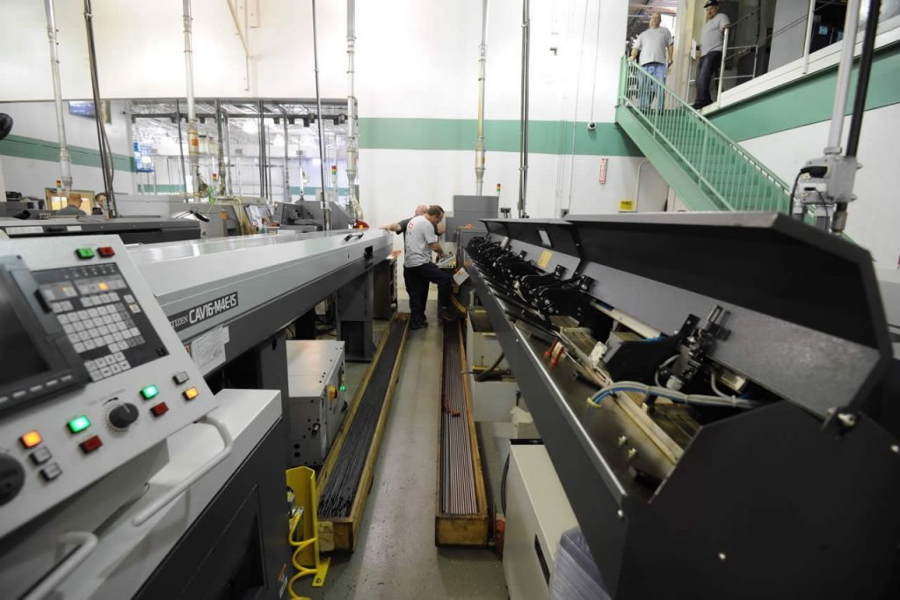
Mechanical Engineering and Precision Manufacturing
The Swiss mechanical and electrical engineering industries rely heavily on exporting specialized machinery and factory equipment. When the franc appreciates sharply, Swiss machinery instantly becomes more expensive for foreign buyers in the Eurozone and North America. Companies are forced to choose between absorbing currency losses—thereby compressing profit margins—or raising foreign currency prices and risking market share erosion.
The Watchmaking and Luxury Sectors
Swiss watchmakers occupy a unique market tier defined by unmatched craftsmanship and heritage. While luxury goods possess greater price inelasticity than commodities, sustained sub-parity exchange rates still impose heavy friction. High-end brands must carefully calibrate global pricing strategies to prevent international arbitrage and maintain sales momentum across key European markets.
Strategic Adaptation and Future Outlook
To survive in an environment where a strong currency is a permanent structural feature, Swiss corporations have transformed their business models. Rather than competing on price, Swiss industries focus relentlessly on technological superiority, product differentiation, automation, and high-value-added services.
In addition, many firms have decentralized their supply chains, shifting production components or assembly lines abroad while retaining high-margin research and development functions within Switzerland. This hybrid model insulates operating margins from sudden currency shocks.
The Swiss franc trading firmly below parity against the euro (EUR/CHF 0.91–0.92) is the natural byproduct of structural economic excellence. Driven by unmatched political stability, a robust current account surplus, and exemplary price stability, the franc remains Europe's premier safe-haven asset. While this currency strength acts as a constant headwind for Swiss exporters, it simultaneously forces the nation's industrial base to innovate continuously. As global macroeconomic conditions evolve, the Swiss franc will undoubtedly retain its esteemed position as a benchmark of financial resilience.
References
European Central Bank. Euro reference exchange rates - Swiss franc (CHF). Available online: https://www.ecb.europa.eu/stats/policy_and_exchange_rates/euro_reference_exchange_rates/html/eurofxref-graph-chf.en.html
OFX Foreign Exchange. EUR to CHF Historical Exchange Rates. Available online: https://www.ofx.com/en-us/forex-news/historical-exchange-rates/eur/chf/
Organisation for Economic Co-operation and Development (OECD). The Significance of Switzerland's Enormous Current Account Surplus. Available online: https://www.oecd.org/en/publications/the-significance-of-switzerland-s-enormous-current-account-surplus_244253177344.html
Swiss National Bank. Official YouTube Channel and Monetary Policy Mandates. Available online: https://www.youtube.com/@swissnationalbank and https://www.snb.ch/en/the-snb/mandates-goals/monetary-policy
Comments