


The Great Rebalancing: Alibaba’s Qwen3.8-Max and the End of Western AI Hegemony


The global race for artificial intelligence supremacy has entered a new, high-stakes chapter. Alibaba Cloud, the technology arm of the Chinese e-commerce giant, recently unveiled Qwen3.8-Max, a frontier AI model that represents a seismic shift in the industry. With a massive 2.4 trillion parameter architecture and a groundbreaking 1 million token context window, Alibaba is not just catching up to Western labs—it is actively redefining the boundaries of what is possible in the open-weights and commercial AI sectors.
Architecture and Scale: Inside the 2.4 Trillion Parameter MoE
At the core of Qwen3.8-Max is a sophisticated Mixture-of-Experts (MoE) architecture designed to maximize computational efficiency while delivering state-of-the-art performance. Operating across 2.4 trillion total parameters with a highly optimized active parameter count per token, the model balances raw intelligence with practical serving costs.

A Massive Context Window: The 1 Million Token Revolution
For years, the context window—the amount of information an AI can process in a single prompt—was a significant bottleneck for complex tasks. While early models were limited to a few thousand tokens, Qwen3.8-Max shatters these constraints with a native 1 million token capacity.
This technical feat allows the model to ingest entire software repositories, multi-volume legal documents, or hours of video footage in a single go. By enabling long-horizon reasoning, Alibaba has positioned Qwen3.8-Max as a tool for autonomous project management and deep research. Unlike its predecessors, this model can maintain coherence across conversations that span tens of thousands of words, effectively acting as a digital collaborator that remembers every detail of a multi-day workflow.
"The ability to process a million tokens natively changes how we think about AI agents. We are moving from simple chatbots to systems that can oversee entire engineering cycles without losing the thread of the project." — AI Industry Analyst Report, August 2026.
Multimodal Prowess: Seeing and Understanding at Scale
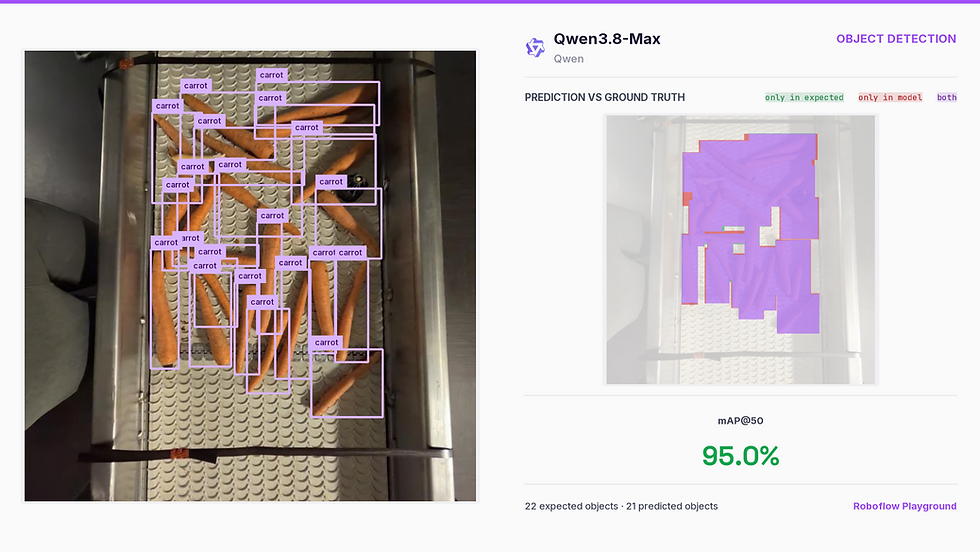
Qwen3.8-Max is not just a text processor; it is a natively multimodal powerhouse. In recent industry evaluations, the model secured the second-place spot in the Vision Arena, outperforming many proprietary models from leading U.S. labs.
Its native visual understanding allows it to perform complex object detection, interpret intricate architectural blueprints, and even analyze medical imaging with high precision. This multimodal integration is seamless, meaning the model does not just view an image and describe it; it understands the spatial relationships and functional context within the visual data, bridging the gap between perception and reasoning.
Aggressive Pricing: A Direct Challenge to the Status Quo
Perhaps the most disruptive aspect of Alibaba’s launch is its pricing strategy. In a move clearly intended to pressure Western competitors like OpenAI and Anthropic, Qwen3.8-Max is offered at a fraction of the cost of comparable Western proprietary models.
Model | Input Price (per 1M tokens) | Output Price (per 1M tokens) | Context Window |
Qwen3.8-Max | $2.00 | $6.00 | 1,000,000 |
Claude Opus 5 | $5.00 | $25.00 | 1,000,000 |
GPT-5.6 Sol | $4.50 | $20.00 | 512,000 |
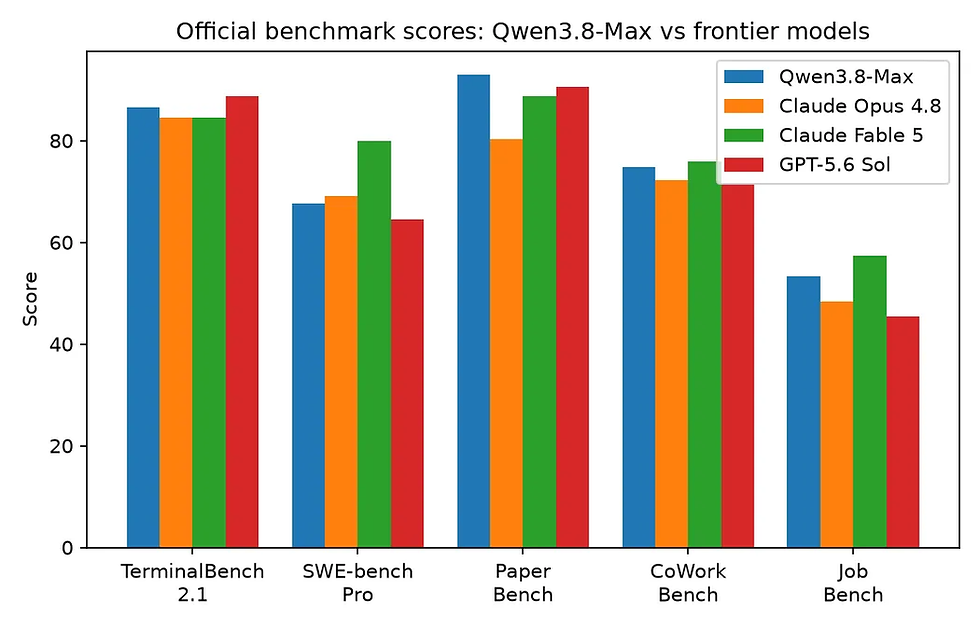
By offering input tokens at roughly 40% of the rate of Claude Opus 5 and output tokens at 24%, Alibaba is forcing a significant compression in profit margins across the sector. This aggressive stance makes high-end frontier intelligence accessible to startups and researchers who were previously priced out of the most capable models.
Pressuring the West: The Shift in Global AI Dynamics
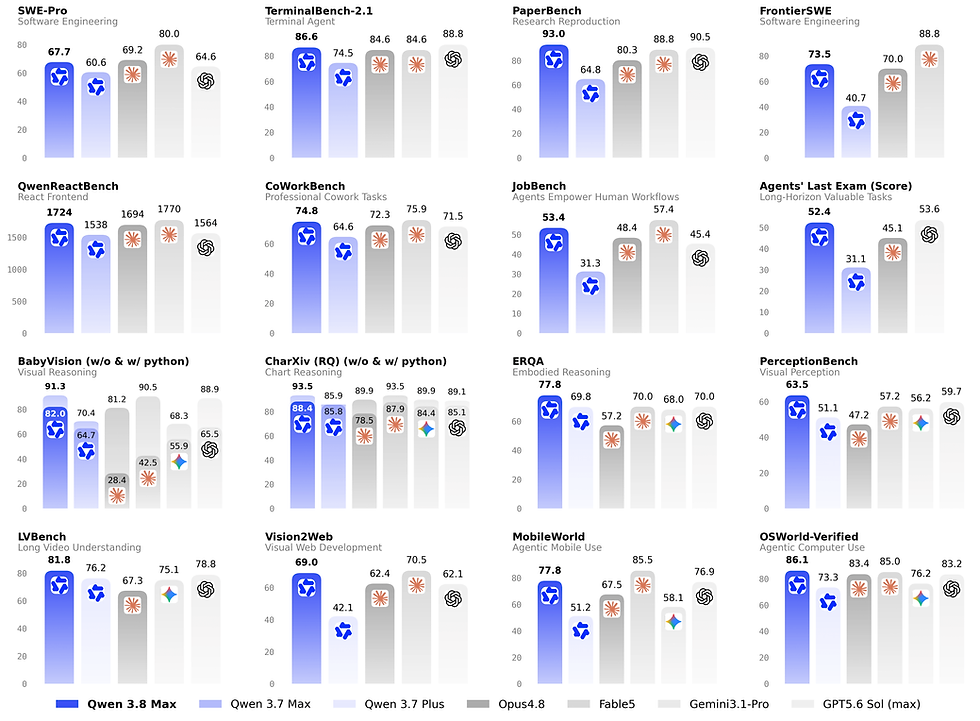
The release of Qwen3.8-Max has sent shockwaves through Silicon Valley. For the first time, a Chinese lab has released a model that is not only competitive in benchmarks but superior in specific high-value metrics like cost-to-performance ratio and open-weight availability.
Western labs are now facing a two-front war. On one side, they must continue to push the absolute ceiling of intelligence. On the other, they must now defend their market share against highly capable, significantly cheaper alternatives from the East. The competitive advantage that companies like OpenAI once enjoyed is rapidly evaporating as Alibaba proves that frontier-level intelligence can be scaled and commoditized efficiently.
A New Era of Competition
The arrival of Qwen3.8-Max marks a turning point in the history of artificial intelligence. By combining a massive context window, native multimodality, and an uncompromising pricing model, Alibaba has successfully challenged the dominance of Western AI labs. As the industry moves forward, the focus will likely shift from purely scaling up parameters to scaling out utility—making these powerful tools more efficient, more affordable, and deeply integrated into the global economic structure.
Reference Videos:
Official Launch Keynote: Alibaba Cloud Qwen3.8-Max Unveiling
Technical Deep Dive: Inside the 2.4 Trillion Parameter MoE Architecture
Comments