


The Future of Sustainable Technology: Efficiency and Circularity in the Digital Age

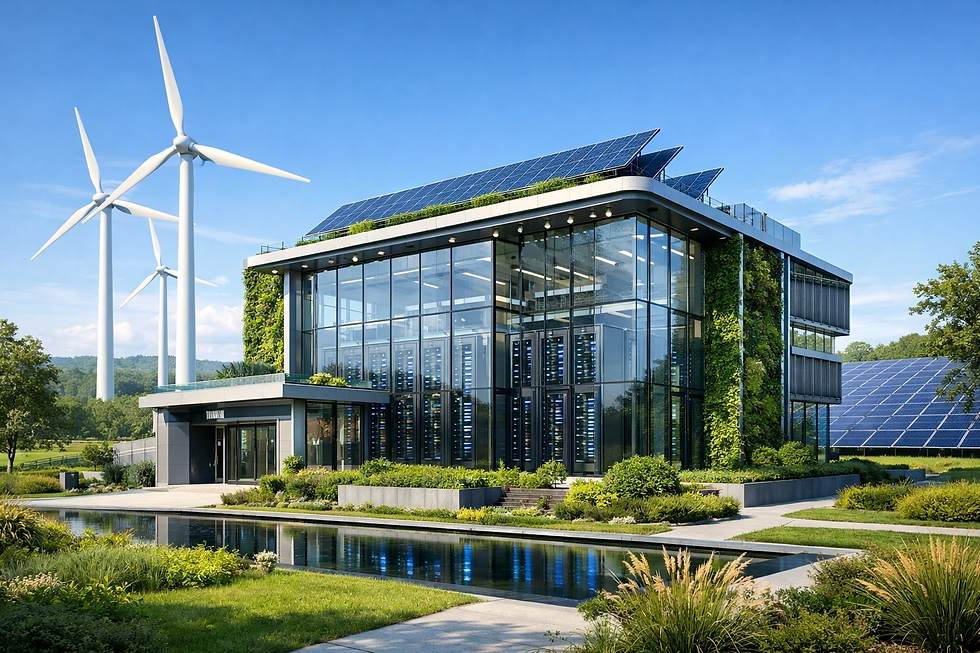
The rapid expansion of artificial intelligence and cloud computing has propelled the global digital economy to unprecedented heights. However, this exponential growth brings a significant environmental challenge: a surging demand for energy and an increase in electronic waste. As the digital footprint of enterprises expands, the technology sector is undergoing a profound transformation. To mitigate environmental impacts and improve operational efficiency, companies are increasingly prioritizing sustainable technology. This paradigm shift is anchored in three foundational pillars: the development of low-consumption data centers, the deployment of energy-optimized algorithms, and the adoption of circular economy models for hardware management.
Redefining Infrastructure: Low-Consumption Data Centers
Data centers are the beating heart of the modern digital economy, but their energy appetite is staggering. Global data center power demand is projected to nearly double between 2024 and 2030, driven largely by the intensive computational requirements of artificial intelligence [1]. In response to this challenge, the industry is moving away from traditional, resource-heavy infrastructure toward highly efficient, low-consumption models.
A critical area of innovation is thermal management. Historically, data centers have relied on evaporative cooling systems, which consume vast amounts of water. In regions facing water scarcity, this approach is becoming economically and environmentally untenable. Consequently, operators are transitioning to waterless cooling technologies and closed-loop chilled water systems [2]. For high-density AI workloads, advanced techniques such as direct-to-chip liquid cooling and immersion cooling are becoming standard practice. These methods offer superior heat dissipation while drastically reducing the energy required for climate control.
Furthermore, the energy sources powering these facilities are evolving. While solar and wind energy have been the primary focus of renewable procurement, their intermittent nature poses challenges for the constant baseload requirements of data centers. As federal tax incentives for certain renewables face expiration, the industry is increasingly investing in alternative clean energy solutions. Nuclear power, particularly Small Modular Reactors (SMRs), and geothermal energy are gaining traction due to their ability to provide stable, carbon-free baseload power [2]. Additionally, the integration of advanced energy storage systems and Virtual Power Plants (VPPs) allows data centers to interact dynamically with the grid, storing excess renewable energy and reducing consumption during peak demand periods.
Cooling Technology | Primary Benefit | Ideal Use Case |
Closed-Loop Chilled Water | Minimal water loss | Water-stressed geographic regions |
Direct-to-Chip Liquid Cooling | High thermal transfer efficiency | High-density AI server racks |
Immersion Cooling | Maximum heat dissipation | Extreme computing environments |
Green AI: The Role of Optimized Algorithms
While hardware efficiency is crucial, the software that runs on it plays an equally significant role in energy consumption. The training and inference processes of large language models and complex neural networks require massive computational power. To address this, researchers and engineers are pioneering "Green AI" — a movement at the forefront of sustainable technology — focused on optimizing algorithms to achieve high performance with minimal energy expenditure.
Algorithmic optimization encompasses several sophisticated techniques designed to streamline computational workloads. One prominent method is model pruning, which involves systematically removing redundant or non-essential parameters from a neural network. This reduces the model's size and the computational effort required to run it, without significantly compromising accuracy [3]. Similarly, quantization reduces the precision of the numerical values used within the model—for instance, converting 32-bit floating-point numbers to 8-bit integers. This drastically lowers memory usage and accelerates processing speeds, leading to substantial energy savings.
Beyond structural modifications to the models themselves, operational strategies are also being refined. Dynamic scaling and intelligent resource allocation ensure that computing power is only deployed when necessary, preventing energy waste during idle periods. Furthermore, multi-model routing systems can analyze incoming tasks and direct them to the most efficient model available, reserving energy-intensive large models only for the most complex queries [4]. By embedding energy awareness directly into the software architecture, enterprises can significantly curtail the carbon footprint of their AI initiatives.

Closing the Loop: Circular Hardware Management
The sustainability of technology extends beyond energy consumption to the physical lifecycle of the hardware itself. The traditional linear model of "take, make, dispose" has led to a mounting crisis of electronic waste (e-waste) and the depletion of critical raw materials. To combat this, forward-thinking enterprises are embracing circular economy principles in their IT Asset Management (ITAM) strategies.
Circular hardware management focuses on maximizing the lifespan and utility of technological assets. Instead of discarding outdated servers and networking equipment, companies are prioritizing refurbishment, reuse, and component harvesting. When a server reaches the end of its primary lifecycle, its functional components—such as memory modules or processors—can be extracted and repurposed in secondary systems. This approach not only diverts hazardous materials from landfills but also significantly reduces the Scope 3 greenhouse gas emissions associated with manufacturing new equipment.
The business models supporting IT procurement are also shifting to facilitate circularity. The Hardware-as-a-Service (HaaS) model is gaining prominence, transitioning the relationship between enterprises and hardware from ownership to usership. In a HaaS arrangement, the service provider retains ownership of the equipment and is responsible for its maintenance, upgrades, and eventual end-of-life processing [5]. This incentivizes manufacturers to design durable, modular hardware that is easy to repair and recycle. Research indicates that implementing robust circular economy strategies in IT can drive cost savings of up to 67%, demonstrating that environmental responsibility and financial performance are not mutually exclusive [6].
Lifecycle Stage | Linear Economy Approach | Circular Economy Approach |
Procurement | Purchase new equipment | Hardware-as-a-Service (HaaS), refurbished assets |
Utilization | Run until obsolete | Proactive maintenance, modular upgrades |
End-of-Life | Landfill disposal or basic recycling | Component harvesting, refurbishment, secure data destruction |
The pursuit of sustainable technology is no longer a peripheral corporate social responsibility initiative; it is a strategic imperative for the digital age. As the demand for computing power continues to accelerate, enterprises must adopt a holistic approach to mitigate their environmental impact. By investing in low-consumption data centers, deploying energy-optimized algorithms, and embracing circular hardware management, organizations can significantly reduce their digital footprint. This multifaceted strategy not only ensures compliance with increasingly stringent environmental regulations but also drives operational efficiency and long-term resilience. The future of technology lies in the seamless integration of innovation and sustainability, proving that the digital revolution can coexist harmoniously with ecological stewardship.
References
[1] S&P Global. "Rapid data center growth faces sustainability challenges." 2025.
[2] DataBank. "Five Sustainability Trends That Will Define Data Centers in 2026." 2026.
[3] ScienceDirect. "Green AI techniques for reducing energy consumption in AI." 2025.
[4] Hitachi Ventures. "Powering the Future: The Path to Energy-Efficient AI."
[5] SDI Alliance. "IT Hardware-as-a-Service: Business model innovation as a pathway to circularity." 2021.
[6] Research and Metric. "Circular Economy 2025: 8 Game-Changing Market Intelligence Insights." 2025.
Comments