


Swiss Exporters Squeezed by a Strong Franc and U.S. Tariffs


For decades, Swiss exporters built a durable business model around adding value rather than competing on low prices. Precision engineering, pharmaceuticals, medical technology, chemicals, watches, instruments and premium food products could justify Swiss wages and a strong national brand. Customers paid for reliability, intellectual property, quality control and after-sales service.
That model is now facing a difficult combination. The franc has become more expensive for foreign buyers, while U.S. trade measures have raised the landed price of many Swiss goods. The pressure is not uniform: pharmaceuticals can be treated differently from machinery, watches or metals, and companies with American production are better protected than firms that manufacture almost everything at home. Yet the basic problem is shared: revenue is earned in dollars or euros, while a large part of the cost base remains in francs.
The result is a margin squeeze. An exporter can absorb the exchange-rate loss, raise its foreign-currency price, shift some production abroad, or ask distributors and customers to share the burden. None of these choices is painless.
The franc shock
The Swiss franc rose 12.7% against the U.S. dollar in 2025 and gained another 3.5% in the first weeks of 2026, according to CNBC. It reached an 11-year high against the dollar in January, as investors sought safe-haven assets amid geopolitical and trade-policy uncertainty.1
A stronger franc reduces the Swiss-currency value of overseas sales. If a company invoices a U.S. customer in dollars, the same dollar receipt converts into fewer francs. If it tries to preserve its franc margin by increasing the dollar price, the product becomes less competitive. This is especially difficult for smaller manufacturers, which often lack sophisticated hedging programs or foreign plants.
The impact is more nuanced than a simple claim that the franc is always “overvalued.” A March 2026 analysis by SWI swissinfo.ch quoted University of Bern economist Aymo Brunetti, who argued that the real exchange rate, adjusted for inflation, had been broadly stable since 2015 with only a modest recent increase. Swissmem’s Jean-Philippe Kohl nevertheless said that the franc was about 4% to 5% too strong against the euro for many businesses to absorb without losing competitiveness.2
That distinction matters. Large exporters may benefit from imported components becoming cheaper, and highly differentiated products can face relatively inelastic demand. But accounting results are based on nominal exchange rates. Switzerland Global Enterprise told SWI that currency risk ranked first in a survey of 700 export-oriented Swiss SMEs, ahead of U.S. trade policy.2
The Swiss National Bank has limited room to respond. Its policy rate stood at 0% in March 2026, and the central bank said that the franc’s appreciation since December had tightened monetary conditions.3 The franc’s safe-haven role also complicates intervention: geopolitical shocks can attract capital into Switzerland precisely when exporters need relief. At the same time, U.S. sensitivity to foreign-exchange intervention makes an aggressive attempt to weaken the currency politically delicate.1 2
From a 39% threat to a complicated tariff regime
The U.S. tariff story has shifted several times. In August 2025, Washington announced a possible 39% tariff on Swiss imports, one of the highest rates applied under that round of measures. The United States accounted for roughly one-sixth of Switzerland’s total exports, and Swissmem warned that the impact on technology companies, exports and employment could be severe.4
That headline shock was later reduced. A November 2025 U.S.–Swiss framework set a cumulative reciprocal tariff rate of no more than 15% and linked the arrangement to Swiss and Liechtenstein investment commitments of at least $200 billion in the United States, according to the White House.5 The arrangement offered relief, but it did not restore the former certainty of open access. It also encouraged companies to consider more production on U.S. soil, which may protect sales but can move value creation away from Switzerland.
By August 2026, the rules were more fragmented. Switzerland’s State Secretariat for Economic Affairs reported that, from 24 July, a U.S. Section 301 measure imposed a variable additional tariff of up to 12.5%, offset by the existing most-favoured-nation duty. Numerous product categories were exempt. Sector-specific measures remained in force, including additional tariffs affecting pharmaceuticals from 31 July, with company- and product-specific exemptions.6
For a company, this is more than a tariff percentage. Customs classification, origin rules, exemptions, contract terms and the treatment of components can determine the actual burden. A Swiss producer that imports American inputs may recover part of the cost through its supply chain, while a watchmaker or specialist machinery firm that performs most of its high-value work in Switzerland has fewer such offsets.
Watches, machinery and chemicals feel the difference
The most visible exposure is in watches and jewellery, where the product is compact, expensive and strongly associated with Swiss origin. A tariff can be passed through in price, but the customer may delay a purchase, choose a rival brand, or buy through a different channel. Swatch Group chief executive Nick Hayek told SWI that CHF308 million of the company’s sales decline was attributable purely to the currency effect.2
Machinery and precision components face a different problem. Industrial buyers compare total operating costs, delivery reliability and technical performance. Swiss quality can command a premium, but a stronger franc narrows the room for that premium. The Swiss National Bank’s company discussions found that around one-fifth of surveyed firms were directly or indirectly affected by U.S. tariffs, especially in mechanical engineering, electrical and metal industries and watchmaking. Some planned to negotiate burden-sharing with U.S. customers; others were considering expanded American production.3
Pharmaceuticals illustrate why the aggregate export numbers can mislead. Switzerland’s 2025 exports reached a record CHF287.0 billion, up 1.4%, driven largely by chemicals and pharmaceuticals, according to the Federal Office for Customs and Border Security.7 A strong pharmaceutical result can therefore conceal weakness in smaller industrial exporters. It also does not eliminate the risk created by U.S. sector-specific duties, even where exemptions or separate arrangements soften the immediate effect.
Why “just move production” is not a simple answer
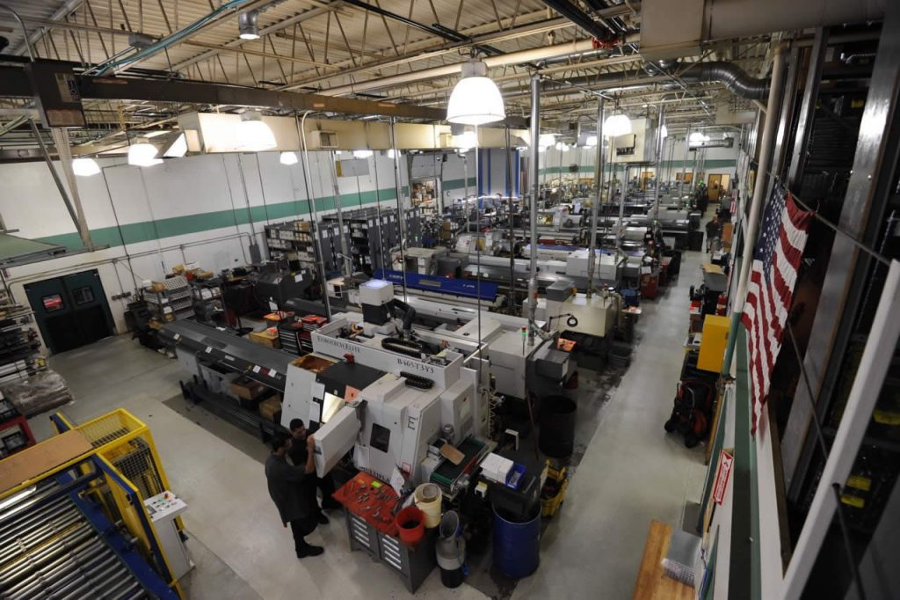
Building a plant in the United States can match costs and revenues in the same currency, reduce border exposure and place production closer to customers. The White House specifically highlighted Swiss investments by companies such as Roche, Novartis, ABB and Stadler.5 Yet relocation can be expensive, slow and technically risky. Swiss exporters often depend on concentrated skills, specialist suppliers, research networks and tightly controlled production processes that have developed over many years.
A second response is financial hedging. Forward contracts can protect a known dollar receipt, while natural hedges can be created by borrowing, sourcing or producing in the sales currency. Hedging, however, has a cost and cannot fully protect long-term competitiveness. It also does little when a tariff permanently changes the price relationship between a Swiss product and its U.S. substitute.
A third response is strategic differentiation. If the product solves a difficult problem, reduces downtime or carries a trusted brand, buyers may accept a higher price. This is the logic behind Switzerland’s value-added model. The danger is that too many companies may be forced to charge more at the same time, while U.S. customers face weaker purchasing power and more political pressure to buy locally.
The policy dilemma
The Swiss National Bank must balance price stability against export competitiveness. A stronger franc lowers the cost of imported goods and restrains inflation, which helps households but reduces the franc value of foreign sales. Cutting rates or intervening in currency markets could ease the pressure, yet safe-haven inflows may overwhelm modest policy moves and intervention can trigger criticism abroad.1 3
The more durable answer lies outside monetary policy: lower domestic compliance costs, faster approvals, stronger export insurance, broader free-trade access and better support for smaller firms’ hedging and market diversification. Such measures cannot erase the franc’s safe-haven premium or U.S. tariff decisions, but they can make the Swiss production base more adaptable.
A test of the value-added model
Swiss exporters are not suddenly uncompetitive. The record export figure for 2025 and the resilience of pharmaceuticals show that high-value products can continue to sell across borders.7 The warning is that resilience at the national level can coexist with acute stress among individual firms. A global pharmaceutical group may absorb currency volatility more easily than a family-owned component maker with a handful of American customers.
The central question is therefore not whether Switzerland should abandon value-added production. It is whether firms can keep creating that value in Switzerland when the franc is strong, tariffs are unpredictable and customers are demanding local supply. The answer will depend on how much of the burden is absorbed by margins, shared with buyers, hedged in financial markets, or offset by investment in foreign production.
For now, the country’s export strategy is being tested on two fronts at once. The franc makes Swiss-made goods more expensive in foreign currency. U.S. tariffs add a border cost that even exceptional engineering cannot always overcome. Swiss exporters may continue to win on quality, but they will need more flexibility in pricing, production and market choice than the old formula required.
References
Comments