


Sodium-Ion Batteries and New Energies: A Sustainable Path to Energy Storage

The global transition towards cleaner energy sources is critically dependent on advanced energy storage solutions. As renewable energy technologies like solar and wind power become more prevalent, the need for efficient, cost-effective, and sustainable battery systems to store intermittent energy has grown exponentially. For decades, lithium-ion batteries have dominated this space, powering everything from portable electronics to electric vehicles (EVs). However, the increasing demand for lithium, coupled with its limited supply and volatile pricing, has spurred a global search for viable alternatives [1]. Among these, sodium-ion batteries (SIBs) have emerged as a promising candidate, offering a more abundant, safer, and potentially cheaper solution for the future of energy storage.
This article examines the rapidly growing field of sodium-ion battery technology, covering its core operating principles, drawing comparisons with well-established lithium-ion systems, outlining its key benefits and limitations, and exploring how it may play a critical role in driving the shift toward clean and renewable energy sources.
The Rise of Sodium-Ion Batteries: A Comparison with Lithium-Ion
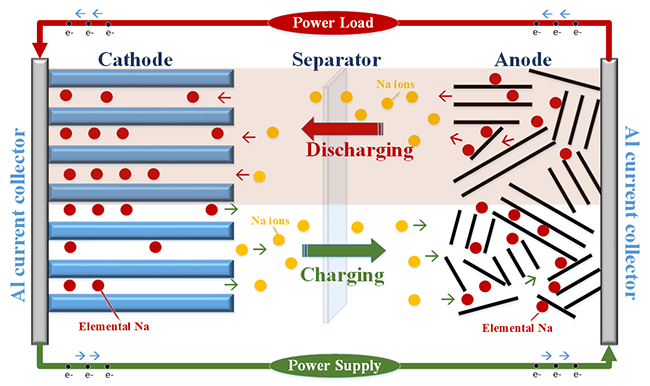
Sodium-ion batteries operate on a similar principle to their lithium-ion counterparts: energy is stored and released through the movement of ions between a cathode and an anode during charge and discharge cycles. The key distinction lies in the active material—sodium instead of lithium. Sodium is the sixth most abundant element on Earth, making it significantly more accessible and cheaper than lithium [2].
Key Differences and Comparative Advantages:
Feature | Lithium-Ion Batteries | Sodium-Ion Batteries |
Raw Materials | Rare (0.0017% of Earth’s crust) [2] | Abundant (2.6% of Earth’s crust) [2] |
Material Costs | $10,000 - $11,000 per metric ton (lithium carbonate) [2] | $600 - $650 per metric ton (sodium carbonate) [2] |
Energy Density | Higher (100-300 Wh/kg) [2] | Lower (100-160 Wh/kg) [2] |
Charging Speed | Slower charging times | Faster charging times |
Cycle Life | 8,000-10,000 cycles [2] | 5,000 cycles [2] |
Safety | Flammable electrolytes, potential for thermal runaway [2] | More stable chemistry, less risk of thermal runaway [2] |
Weight | Lighter batteries for EV use (due to higher energy density) [2] | Heavier batteries for EV use (due to lower energy density) [2] |
Transportation | Higher shipping costs, hazardous material classification [2] | Lower shipping costs, less stringent regulations [2] |
As illustrated in the table, the primary advantage of SIBs stems from the abundance and low cost of sodium. This translates into significantly lower material and production costs, making them an attractive option for large-scale applications where cost-effectiveness is paramount [2]. Furthermore, SIBs generally exhibit enhanced thermal stability, reducing the risk of thermal runaway and improving overall safety compared to some high-nickel lithium chemistries [2] [3]. They also offer faster charging times and can operate effectively in a wider range of temperatures, including colder climates where lithium-ion performance can degrade [2].

However, a notable drawback of current sodium-ion technology is its lower energy density compared to lithium-ion batteries. Sodium ions are larger and heavier than lithium ions, which inherently limits the gravimetric and volumetric energy density of SIBs [3]. This characteristic makes them less suitable for applications where weight and space are critical, such as high-performance electric vehicles requiring long ranges [2]. Despite this, ongoing research and development are continuously improving SIB energy density, with some advancements bringing them closer to the performance of certain lithium-ion chemistries [4].
Applications and Market Momentum
The distinctive properties of Sodium-ion batteries make them particularly well-suited for certain applications within the emerging energy sector. Their lower cost, enhanced safety, and robust performance make them particularly well-suited for:
Grid-Scale Energy Storage Systems (ESS): This is projected to be the most significant application for SIBs, with forecasts indicating that 70% of sodium-ion batteries will be used for grid support by 2026 [2]. They can effectively store surplus renewable energy from solar and wind farms, stabilize grids, and provide backup power, addressing the intermittency challenges of renewables. Companies like Peak Energy in the US are already deploying grid-scale sodium-ion storage solutions [1].
Small Electric Vehicles and Logistics: While not yet competitive with high-end EVs, SIBs are finding their niche in smaller electric vehicles, such as low-speed EVs, scooters, and logistics vehicles. In 2024, JMEV began offering its EV3 vehicle with a sodium-ion battery pack, and scooter manufacturers like Yadea launched sodium-ion powered two-wheelers in China in 2025 [1].
Home Energy Storage: The potential for home energy storage is also high, offering homeowners a more affordable and safer option to store solar energy and reduce reliance on the grid [2].
The market for sodium-ion batteries is experiencing rapid growth. Global shipments are projected to reach 9 GWh in 2025, a 150% increase from 2024 [4]. Major battery manufacturers, particularly in China, are heavily investing in SIB technology. CATL, a leading battery giant, launched its Naxtra sodium-ion product line in 2025 and has begun large-scale manufacturing. BYD is also constructing a massive production facility for SIBs [1].
Future Challenges and Prospects
Despite the significant progress and promising outlook, sodium-ion batteries still face challenges that need to be addressed for widespread adoption:
Energy Density: As mentioned, improving energy density remains a key focus for researchers to expand SIB applications into more demanding sectors like long-range EVs [3].
Cycle Life: While improving, the cycle life of SIBs is currently lower than that of advanced lithium-ion batteries, which could impact their long-term economic viability in certain uses [2].
Supply Chain and Infrastructure: The nascent stage of the SIB industry means that dedicated supply chains and manufacturing infrastructure are still under development. Scaling up production to meet projected demand will require substantial investment and coordination [2].
Nevertheless, the future of sodium-ion batteries appears bright. They are not necessarily a direct replacement for lithium-ion batteries but rather a complementary technology. Experts anticipate a future where lithium-ion batteries continue to dominate high-performance EVs, while sodium-ion batteries become the preferred choice for stationary energy storage, small EVs, and other applications where cost, safety, and abundance are prioritized over maximum energy density [2]. Continuous advancements in electrode materials, electrolyte compositions, and battery design are steadily expanding the performance capabilities of SIBs, laying the groundwork for a more varied and robust energy storage environment.

Sodium-ion batteries represent a crucial step forward in the quest for sustainable and secure energy storage. Their inherent advantages—derived from the abundance and low cost of sodium, coupled with enhanced safety and faster charging capabilities—make them an indispensable component of the global energy transition. While challenges related to energy density and infrastructure remain, the rapid advancements and significant industry investment underscore the immense potential of SIBs to complement lithium-ion technology and accelerate the adoption of renewable energy worldwide. As research continues and production scales, sodium-ion batteries are poised to play a transformative role in shaping a cleaner, more sustainable energy future.
References
[1] MIT Technology Review. (2026, January 12). Sodium-ion batteries: 10 Breakthrough Technologies 2026. https://www.technologyreview.com/2026/01/12/1129991/sodium-ion-batteries-2026-breakthrough-technology/
[2] Laserax. (n.d.). Sodium-Ion Battery Vs. Lithium-Ion Battery: Which One is Better?. https://www.laserax.com/blog/sodium-ion-vs-lithium-ion-batteries
[3] C&EN. (2025, November 17). Sodium-ion batteries: Should we believe the hype?. https://cen.acs.org/energy/energy-storage-/Sodium-ion-batteries-Should-believe/103/web/2025/11
[4] Battery-Tech.net. (n.d.). How Sodium-Ion Technology Is Disrupting the Global Battery Market in 2026. https://battery-tech.net/how-sodium-ion-technology-is-disrupting-the-global-battery-market-in-2026/
Comments