


Generative AI & Large Language Models

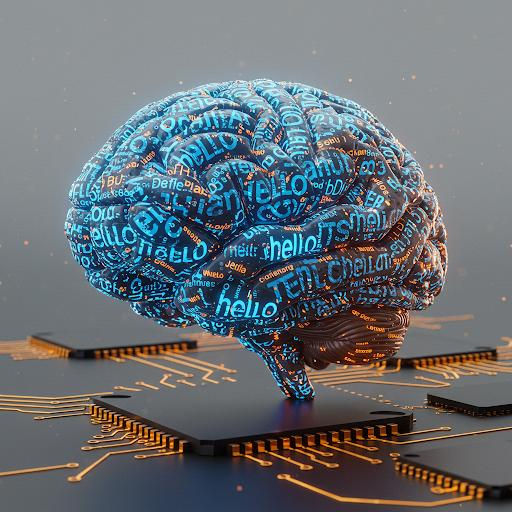
The emergence of Artificial Intelligence (AI) has continually expanded the limits of machine capabilities, with Generative AI and Large Language Models (LLMs) leading this transformative wave. These sophisticated AI systems are transforming how we interact with technology, enabling the creation of diverse content—from coherent text and realistic images to intricate sounds—and offering unprecedented capabilities in information processing and task automation. This article explores the fundamental concepts of Generative AI and LLMs, examining their functions, diverse applications, and significant influence on human productivity and different industries.
Understanding Generative AI
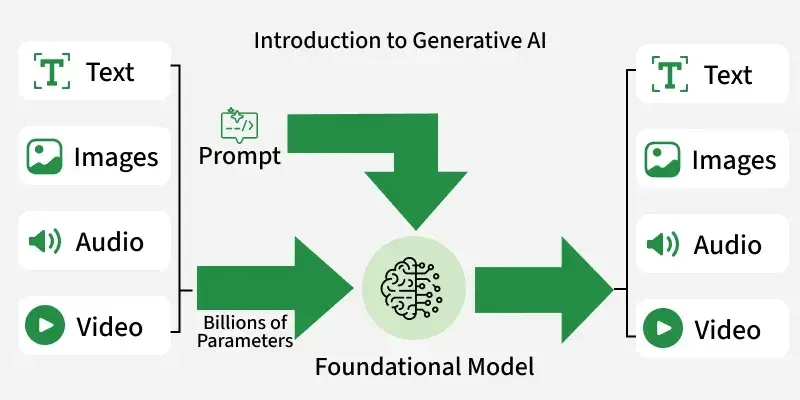
Generative AI is a subset of artificial intelligence that focuses on creating new, original content rather than merely analyzing or classifying existing data. Unlike traditional machine learning models that might predict outcomes or identify patterns, generative models are designed to generate novel outputs that resemble the data they were trained on but are not identical copies. This capability extends across various modalities, including text, images, audio, and video.
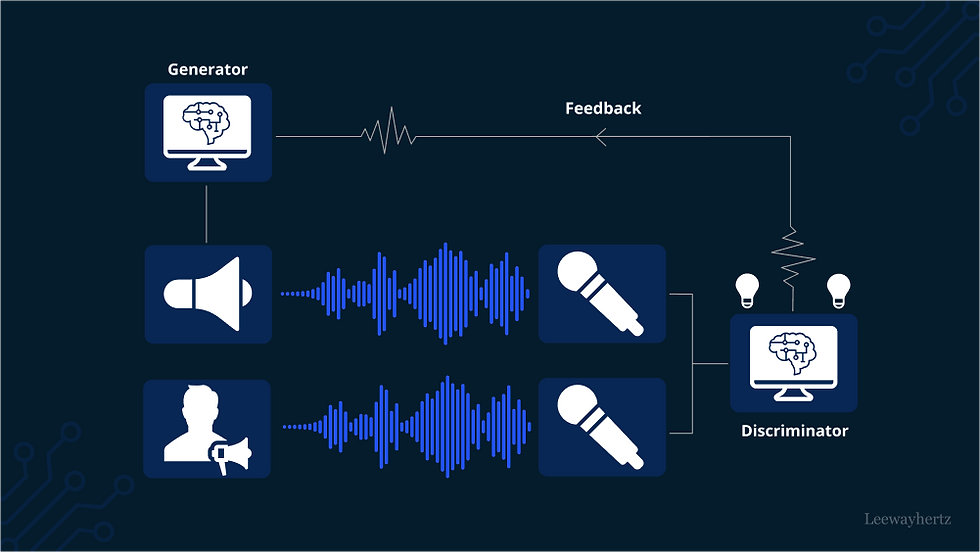
At its core, Generative AI learns the underlying patterns and structures of a dataset during its training phase. Once trained, it can then use this learned knowledge to produce new instances that share the characteristics of the training data. This process often involves complex neural network architectures, such as Generative Adversarial Networks (GANs) and Variational Autoencoders (VAEs), which have been instrumental in advancing the field.
The Rise of Large Language Models (LLMs)
Large Language Models (LLMs) represent a significant breakthrough within Generative AI, specifically tailored for processing and generating human language. These models are characterized by their immense size, often comprising billions or even trillions of parameters, and are trained on vast corpora of text data from the internet. This extensive training allows LLMs to develop a deep understanding of grammar, syntax, semantics, and even contextual nuances, enabling them to perform a wide array of language-related tasks with remarkable proficiency.
LLMs operate by predicting the next word in a sequence, a seemingly simple task that, when scaled, allows for the generation of highly coherent and contextually relevant text. Their architecture typically relies on transformer networks, which are particularly effective at handling sequential data and capturing long-range dependencies within text. This enables LLMs to generate detailed responses, summarize large volumes of information, translate languages, and even write creative content like poetry or code.

Multimodal Capabilities of LLMs
While initially focused on text, modern LLMs have evolved into multimodal systems, capable of understanding and generating content across different data types, including images, audio, and video. This multimodal capability is achieved by converting various inputs into a unified mathematical representation, known as embedding vectors. For instance, an image, a spoken word, and written text representing the same concept are all transformed into points in a high-dimensional mathematical space, allowing the model to perform cross-modal reasoning [1].
This unified representation is facilitated by three key components:
Encoders: These translate raw sensory data (e.g., visual pixels, audio waveforms) into initial mathematical representations. For images, Vision Transformers divide photographs into patches, treating them like words. For audio, encoders convert sound waves into spectrograms, which are visual-like representations of sound frequencies [1].
Projection Layers: These act as bridges, aligning the different mathematical representations from various encoders into a shared space where the language model operates. This ensures that representations of the same concept across different modalities are mathematically close [1].
Core LLM: The central processing unit, often a transformer-based architecture, receives all inputs as sequences of tokens, regardless of their original modality. This allows the LLM to reason across modalities as naturally as it handles pure text [1].
This advanced capability allows LLMs to not only generate text descriptions for images but also create images from text prompts, synthesize speech, and even compose music. The ability to process and generate diverse media types significantly expands the applications and impact of these models.
Applications and Impact
The capabilities of Generative AI and LLMs have led to a wide array of applications across numerous sectors, fundamentally altering workflows and creating new possibilities.
Content Creation and Personalization
One of the most immediate impacts is in content creation. LLMs can generate articles, marketing copy, social media posts, and even entire scripts, significantly reducing the time and effort required for content production. This extends to personalized content, where AI can tailor messages, recommendations, and user experiences based on individual preferences and behaviors.
Detailed Responses and Information Summarization
LLMs excel at understanding complex queries and providing detailed, nuanced responses. They can act as intelligent assistants, answering questions, explaining intricate concepts, and offering insights drawn from vast datasets. Furthermore, their ability to summarize large quantities of information, such as research papers, legal documents, or financial reports, is invaluable for professionals seeking to quickly grasp key points without sifting through extensive texts.
Automation of Tasks
Many tasks that traditionally required human effort can now be automated by Generative AI and LLMs. This includes customer service through AI-powered chatbots, code generation for software development, data entry, and even creative design processes. By automating these tasks, organizations can free up human resources to focus on more complex, strategic, and creative endeavors.
Enhanced Productivity
The integration of Generative AI into workplaces has shown a clear positive impact on productivity. Studies indicate that workers utilizing generative AI tools can save a significant portion of their work hours, leading to increased efficiency and output [2]. This is particularly evident in tasks involving writing, research, and data processing, where AI can accelerate the initial drafting, analysis, and synthesis phases.
However, it's crucial to note that while AI enhances productivity, it also necessitates a shift in human roles. The focus moves from performing repetitive tasks to overseeing AI outputs, refining prompts, and applying critical thinking to the generated content. The collaboration between humans and AI, often termed 'AI-augmented work,' is becoming the new paradigm.
Challenges and Considerations
Despite their transformative potential, Generative AI and LLMs present several challenges and considerations:
Accuracy and Bias: LLMs can sometimes generate inaccurate or biased information, often referred to as 'hallucinations,' due to the nature of their training data. Ensuring the factual correctness and fairness of AI-generated content remains a critical challenge [3].
Privacy and Security: Feeding proprietary or sensitive information into LLMs raises concerns about data leaks and privacy. Organizations must exercise caution and consider building private models for highly confidential data [3].
Ethical Implications: The ability of AI to generate realistic fake content (deepfakes), automate decision-making, and potentially displace jobs raises significant ethical questions that require careful consideration and regulatory frameworks.
Computational Resources: Training and running large LLMs require substantial computational power and energy, posing environmental and economic challenges.
Generative AI and Large Language Models are undeniably reshaping the digital landscape, offering powerful tools for content creation, information processing, and task automation. Their ability to generate text, images, and sounds, coupled with their capacity to provide detailed responses and summarize vast amounts of data, marks a new era of human-computer interaction. While challenges related to accuracy, bias, privacy, and ethics persist, the ongoing advancements in this field promise even more sophisticated and impactful applications. As these technologies continue to evolve, understanding their capabilities and limitations will be crucial for individuals and organizations seeking to harness their full potential responsibly and effectively.
References
[1] Multimodal LLMs Basics: How LLMs Process Text, Images, Audio & Videos. (n.d.). ByteByteGo. Retrieved from https://blog.bytebytego.com/p/multimodal-llms-basics-how-llms-process
[2] The Impact of Generative AI on Work Productivity. (2025, February 27). St. Louis Fed. Retrieved from https://www.stlouisfed.org/on-the-economy/2025/feb/impact-generative-ai-work-productivity
[3] Machine learning and generative AI: What are they good for in 2025? (n.d.). MIT Sloan. Retrieved from https://mitsloan.mit.edu/ideas-made-to-matter/machine-learning-and-generative-ai-what-are-they-good-for
Comments