


Beyond the Horizon: The Great Satellite Internet Race of 2026

The dream of universal connectivity is no longer tethered to terrestrial cables. In 2026, the heavens are busier than ever as a new era of global telecommunications unfolds. The massive deployment of Low Earth Orbit (LEO) satellite constellations has transformed from a niche experimental project into a high-stakes industrial competition. At the heart of this struggle are two titans: SpaceX’s Starlink and Amazon’s newly rebranded Amazon Leo (formerly Project Kuiper). Their rivalry is not just about bandwidth; it is about who will control the backbone of the next-generation internet.
The Dominance of Starlink
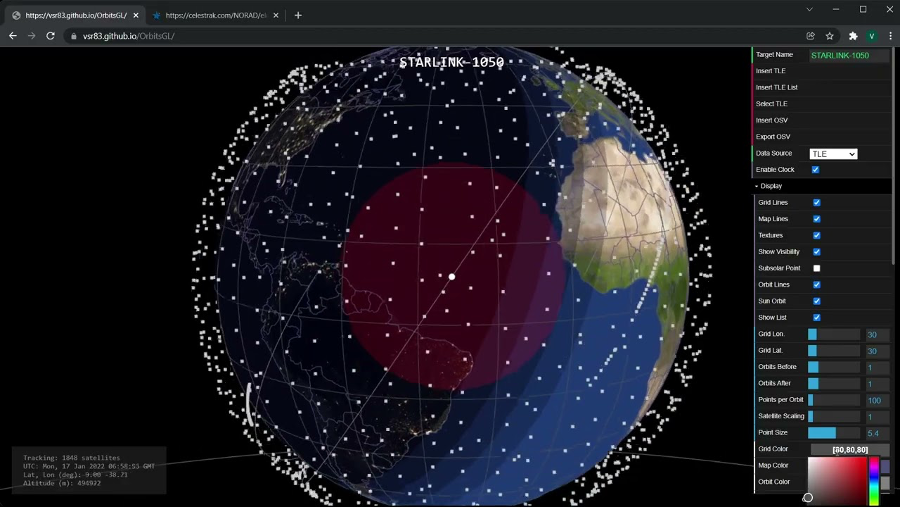
SpaceX has maintained a significant head start in this orbital marathon. As of mid-2026, the Starlink constellation boasts over 10,000 active satellites, providing coverage to more than 150 countries. The company’s vertical integration—owning the rockets that launch the satellites—gives it a structural advantage that competitors struggle to match. With the successful deployment of Starlink V3 satellites via the Starship launch system, SpaceX has dramatically increased the capacity and throughput of its network.
"Starlink has moved from a proof-of-concept to a global utility. With over 9 million subscribers, it has effectively ended the monopoly of traditional rural ISPs in many regions."
One of the most transformative developments for Starlink in 2026 is its "Direct-to-Cell" capability. By partnering with major telecommunications providers like T-Mobile, SpaceX allows standard smartphones to connect directly to satellites in areas without cellular towers. This eliminates "dead zones" for emergency services and basic messaging, further cementing its role as a critical infrastructure provider.
Amazon Leo: The Challenger Emerges
Amazon has officially entered the commercial market with its Amazon Leo service. Despite the initial delays that plagued the project, the company has ramped up its launch cadence significantly. By mid-2026, Amazon aims to have at least 700 satellites in orbit, focusing on a multi-shell architecture that provides layered coverage.
Amazon’s strategy relies on its massive ecosystem. By integrating satellite connectivity with Amazon Web Services (AWS), the company offers enterprise customers a seamless path to the cloud, even from the most remote locations. Furthermore, rumors of bundling Amazon Leo with Prime memberships have created significant anticipation among consumers, potentially leading to a massive shift in market share.

A key technical differentiator for Amazon is its custom-designed Prometheus chip. This silicon allows each satellite to process up to 1 terabit per second (Tbps) of data, enabling higher speeds and lower latency than many early LEO systems.

Comparative Analysis: Starlink vs. Amazon Leo
The competition has led to a rapid evolution in service offerings. While Starlink remains the leader in sheer numbers, Amazon Leo is positioning itself as a premium, cloud-native alternative.
Feature | Starlink (SpaceX) | Amazon Leo (Amazon) |
Satellites in Orbit (2026) | ~10,500 | ~700 (Deploying) |
Target Download Speed | 100–220 Mbps | Up to 400 Mbps |
Typical Latency | 25–60 ms | 20–40 ms (Target) |
Key Advantage | Vertical integration & Starship | AWS & Prime Ecosystem |
Customer Hardware | $499 (Standard) | Under $400 (Target) |
Primary Focus | Consumer & Direct-to-Cell | Enterprise & Cloud Integration |
Both providers utilize Optical Inter-Satellite Links (OISL), often referred to as "laser links." This technology allows satellites to communicate directly with one another in the vacuum of space, where light travels faster than in terrestrial fiber-optic cables. This creates a space-based mesh network that reduces the need for ground stations and lowers latency for intercontinental data transfers.

The Broader Market: OneWeb and Sovereign Constellations
While the SpaceX-Amazon rivalry captures the headlines, other players are carving out vital niches. Eutelsat OneWeb has completed its first-generation constellation and is focusing heavily on the B2B market, maritime, and aviation sectors. Its merger with Eutelsat has created a unique hybrid network that combines the low latency of LEO with the high capacity of Geostationary (GEO) satellites.
Furthermore, the rise of "sovereign constellations" highlights the geopolitical importance of space-based internet. The European Union’s IRIS² project and China’s Thousand Sails (Qianfan) constellation represent efforts by major powers to ensure they are not solely dependent on American commercial providers for critical connectivity.
Environmental and Regulatory Challenges
The rapid expansion of orbital infrastructure is not without its costs. The astronomical community continues to raise concerns about light pollution, as the reflective surfaces of thousands of satellites interfere with ground-based observations. Both SpaceX and Amazon have implemented mitigation strategies, such as dielectric mirror coatings and sunshades, to reduce the brightness of their spacecraft.
More pressing is the issue of orbital debris. The risk of the "Kessler Syndrome"—a cascading series of collisions that could render certain orbits unusable—is a constant shadow over the industry. Regulatory bodies like the FCC and the ITU have tightened requirements for satellite disposal, mandating that operators de-orbit their spacecraft within five years of the end of their mission.
The competition between Starlink and Amazon Leo has moved the world closer to the goal of 100% global connectivity. As these mega-constellations continue to grow, the cost of access is expected to drop, bringing millions of people in underserved regions into the digital economy. The intensification of these offers signifies a fundamental shift in how we perceive the internet: no longer a ground-based luxury, but a space-based right.
Reference Videos:
Comments