


AI Governance and Regulatory Compliance: Ensuring Ethical and Non-Discriminatory AI Use


The swift progress and extensive implementation of Artificial Intelligence (AI) in numerous sectors have created an immediate demand for strong governance frameworks and regulatory compliance systems. As AI systems become more sophisticated and integrated into critical aspects of society, ensuring their ethical, transparent, and non-discriminatory use is paramount. As AI governance shifts, this article dives into pivotal regulations like the EU AI Act and NIST's standards. It points out that staying ethical and legally compliant now hinges on the strategic use of automated tools.
The Imperative of AI Governance
AI governance refers to the set of policies, processes, and structures designed to guide the development, deployment, and use of AI systems responsibly. Its primary objective is to maximize the benefits of AI while mitigating potential risks, such as bias, discrimination, privacy violations, and lack of accountability. Without effective governance, AI systems could inadvertently perpetuate societal inequalities, erode trust, or even cause significant harm.
Key principles often underpinning AI governance frameworks include fairness, transparency, accountability, privacy, and security. These principles serve as guiding stars for organizations and policymakers striving to develop and deploy AI in a manner that aligns with human values and societal well-being [7].

Major Regulatory Frameworks
Several significant regulatory frameworks are emerging globally to address the complexities of AI governance. Among the most prominent are the European Union's AI Act and the National Institute of Standards and Technology (NIST) AI Risk Management Framework.
The EU AI Act
The European Union's Artificial Intelligence Act (EU AI Act) is a landmark piece of legislation, representing the world's first comprehensive legal framework for AI. It adopts a risk-based approach, classifying AI systems into four categories: unacceptable risk, high risk, limited risk, and minimal risk [1].
Unacceptable Risk: AI systems deemed to pose a clear threat to fundamental rights are prohibited. Examples include social scoring systems, manipulative AI, and real-time remote biometric identification in public spaces, with very limited exceptions for law enforcement under strict safeguards [1].
High Risk: These systems are subject to stringent requirements before they can be placed on the market or put into service. High-risk AI includes applications in critical infrastructures, education, employment, law enforcement, migration management, and democratic processes. Providers of high-risk AI systems face obligations related to risk management, data governance, technical documentation, human oversight, robustness, accuracy, and cybersecurity [1].
Limited Risk: AI systems with limited risk, such as chatbots or systems generating deepfakes, are subject to lighter transparency obligations. Users must be informed that they are interacting with an AI system or that content has been generated or manipulated by AI [1].
Minimal Risk: The vast majority of AI applications, such as AI-enabled video games or spam filters, fall into this category and are largely unregulated, encouraging innovation without undue burden [1].
Compliance with the EU AI Act involves significant obligations for providers and users of high-risk AI systems, including establishing robust risk management systems, ensuring high-quality training data, and maintaining comprehensive technical documentation. Non-compliance can result in substantial fines, up to €35 million or 7% of global annual turnover [2]. The Act's provisions are being phased in, with some rules already enforceable and full compliance for high-risk AI systems expected by August 2026 [3].

NIST AI Risk Management Framework (AI RMF)
In the United States, the National Institute of Standards and Technology (NIST) developed the AI Risk Management Framework (AI RMF) to provide a voluntary, flexible, and comprehensive approach to managing AI risks. The AI RMF is designed to be used by organizations across various sectors to address the unique challenges posed by AI systems [3].
The framework is structured around four core functions: Govern, Map, Measure, and Manage [4]:
Govern: Establish an AI risk management culture, policies, and procedures. This involves defining roles, responsibilities, and accountability for AI risk throughout the organization.
Map: Identify and characterize AI risks, including potential harms to individuals, organizations, and society. This function involves understanding the context of AI use and its potential impacts.
Measure: Assess, analyze, and track AI risks. This includes developing metrics and indicators to evaluate the effectiveness of risk mitigation strategies.
Manage: Prioritize, respond to, and recover from AI risks. This involves implementing controls, developing incident re3ponse plans, and continuously monitoring AI system performance.
The NIST AI RMF emphasizes a continuous and iterative approach to risk management, encouraging organizations to integrate AI risk considerations throughout the entire AI lifecycle, from design and development to deployment and monitoring. It also promotes transparency, explainability, and fairness as crucial elements of responsible AI [4].
Automated Compliance and Ethical AI
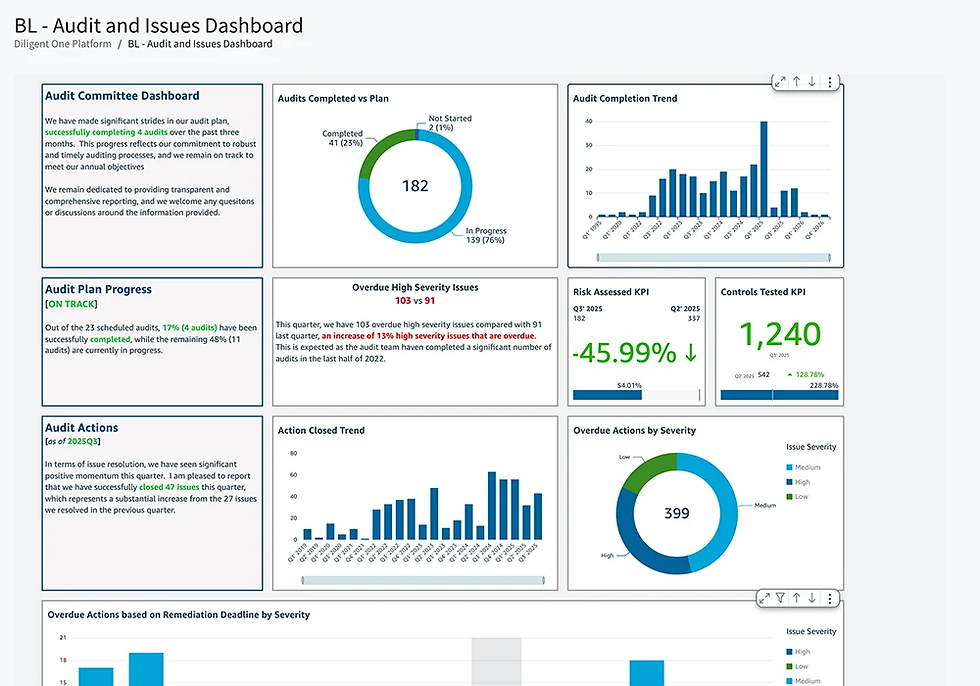
The complexity and dynamic nature of AI systems make manual compliance monitoring and governance challenging. This is where automated compliance mechanisms play a pivotal role. Automated tools and platforms can streamline the process of ensuring that AI systems adhere to ethical guidelines and regulatory requirements, thereby fostering trust and reducing the risk of non-compliance.
Automated compliance solutions can [5]:
Provide real-time monitoring: Continuously track AI system behavior, data usage, and decision-making processes against predefined ethical principles and regulatory frameworks.
Generate compliance reports: Automatically produce detailed reports on AI system performance, risk assessments, and adherence to governance policies, facilitating audits and regulatory submissions.
Automate risk assessments: Identify potential biases, vulnerabilities, and deviations from ethical standards through automated analysis of AI models and their outputs.
Streamline cross-framework mapping: Use AI tools to align different regulatory standards (e.g., NIST AI RMF with GDPR or ISO 27001), simplifying compliance efforts for organizations operating under multiple jurisdictions [6].
By automating these processes, organizations can achieve greater efficiency, accuracy, and consistency in their AI governance efforts. This not only helps in meeting regulatory obligations but also in proactively identifying and mitigating ethical concerns, such as algorithmic bias and discrimination, before they manifest as real-world harms.
Ensuring Non-Discriminatory AI
A core aspect of ethical AI and regulatory compliance is preventing discrimination. AI systems, if not carefully designed and monitored, can inadvertently perpetuate or even amplify existing societal biases present in their training data. Automated tools can help address this by:
Bias Detection and Mitigation: Identifying and quantifying biases in training datasets and AI model outputs. Automated techniques can then be employed to mitigate these biases, ensuring fairer outcomes.
Fairness Metrics: Implementing and continuously monitoring various fairness metrics (e.g., demographic parity, equalized odds) to assess whether AI decisions are equitable across different demographic groups.
Explainability (XAI): Providing insights into how AI systems arrive at their decisions, making it easier to identify and rectify discriminatory patterns. Automated XAI tools can generate explanations that are understandable to human users and auditors.
Continuous monitoring and automated alerts can notify stakeholders of any deviations from fairness criteria, allowing for timely intervention and remediation. This proactive approach is essential for building and maintaining public trust in AI technologies.

Challenges and Future Outlook
Despite the advancements in AI governance and automated compliance, several challenges remain:
Evolving Regulations: The regulatory landscape for AI is still nascent and rapidly evolving, requiring organizations to stay agile and adapt to new requirements.
Complexity of AI Systems: The increasing complexity of AI models, particularly deep learning systems, can make it difficult to fully understand their internal workings and ensure compliance.
Data Privacy: Balancing the need for data to train and validate AI models with stringent privacy regulations (e.g., GDPR) remains a significant hurdle.
Global Harmonization: The lack of a universally agreed-upon global framework for AI governance can create challenges for multinational organizations.
Looking ahead, the trend towards automated and proactive AI governance is expected to accelerate. The development of AI-powered tools for compliance, risk management, and ethical assurance will become increasingly sophisticated. Furthermore, there will be a continued emphasis on international collaboration to foster a harmonized approach to AI regulation, ensuring that AI development benefits all of humanity in an ethical and responsible manner.
AI governance and regulatory compliance are critical pillars for the responsible development and deployment of artificial intelligence. Frameworks like the EU AI Act and the NIST AI RMF provide essential guidance for navigating the ethical and legal complexities of AI. Automated compliance mechanisms are emerging as indispensable tools, enabling organizations to monitor AI systems in real-time, detect biases, and ensure adherence to ethical principles and regulatory requirements. By embracing robust governance and leveraging automation, we can steer the trajectory of AI towards a future where its transformative power is harnessed for the good of society, ensuring that AI use is consistently ethical, fair, and non-discriminatory.
References
[1] High-level summary of the AI Act. (n.d.). EU Artificial Intelligence Act. Retrieved from https://artificialintelligenceact.eu/high-level-summary/
[2] EU AI Act: Key Compliance Considerations Ahead of August 2025. (2025, July 15). GT Law. Retrieved from https://www.gtlaw.com/en/insights/2025/7/eu-ai-act-key-compliance-considerations-ahead-of-august-2025
[3] EU AI Act Summary 2026: Key Rules and Deadlines. (n.d.). Whisperly. Retrieved from https://whisperly.ai/eu-ai-act-summary
[4] AI Risk Management Framework. (n.d.). NIST. Retrieved from https://www.nist.gov/itl/ai-risk-management-framework
[5] How Automation Helps Streamline NIST Compliance. (n.d.). Cynomi. Retrieved from https://cynomi.com/nist/how-automation-helps-streamline-nist-compliance/
[6] 5 AI Best Practices for NIST Framework. (2025, December 22). ISMS Copilot. Retrieved from https://www.ismscopilot.com/blog/ai-best-practices-nist-framework
[7] Building a Responsible AI Framework: 5 Key Principles for Organizations. (2025, June 26). Harvard Professional Development. Retrieved from https://professional.dce.harvard.edu/blog/building-a-responsible-ai-framework-5-key-principles-for-organizations/
Comments