


AI Glasses Go Lightweight: Qualcomm Paves the Way for a New Generation of Smart Eyewear with Dedicated AI Chips

For years, the promise of smart glasses has been tempered by bulky designs, limited battery life, and insufficient processing power. However, a new era is dawning, spearheaded by innovations from companies like Qualcomm. With the introduction of purpose-built AI chips, Qualcomm is setting the stage for a generation of AI-powered smart glasses that are not only lighter and more comfortable but also more capable and easier to mass-produce.
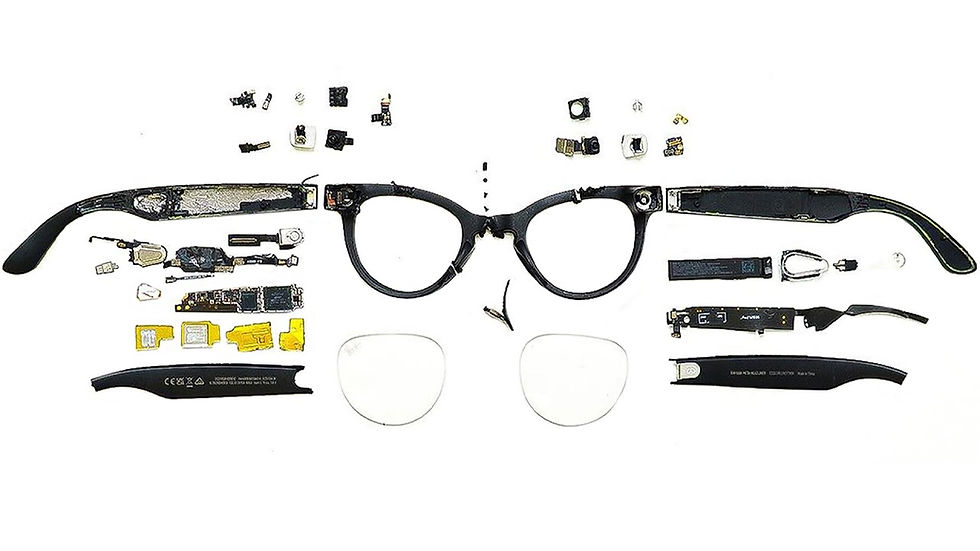
This article delves into how Qualcomm's dedicated AI chips are revolutionizing the design and functionality of smart glasses, making them a viable and integral part of our daily lives.
The Dawn of Lightweight AI Glasses
Early iterations of smart glasses often struggled with form factor. Integrating powerful processors, cameras, sensors, and batteries into a sleek, eyeglasses-like frame proved challenging. The result was often a compromise: either a bulky device with advanced features or a lightweight one with limited capabilities. The demand for a seamless, all-day wearable experience necessitated a fundamental shift in approach.
Qualcomm recognized this challenge and has been working to address it by developing specialized platforms that prioritize both performance and design. The goal is to move beyond the clunky prototypes and deliver smart glasses that users will genuinely want to wear.
Qualcomm's Snapdragon AR2 Gen 1 Platform: A Game Changer
At the heart of this revolution is Qualcomm's Snapdragon AR2 Gen 1 Platform, engineered from the ground up specifically for augmented reality (AR) glasses. This platform represents a significant leap forward, focusing on creating light, wireless, and comfortable AR experiences [1].
Multi-Chip Architecture for Distributed Processing
One of the most innovative aspects of the Snapdragon AR2 Gen 1 is its groundbreaking multi-chip architecture. Unlike traditional single-chip designs, the AR2 distributes processing tasks in two key ways:
Between Glasses and Host Device: Processing is intelligently distributed between the AR glasses and a host device, such as a smartphone or laptop, utilizing ultra-fast Wi-Fi 7 connectivity. This offloads heavy computational tasks, reducing the processing burden on the glasses themselves.
Within the Glasses: Even within the glasses, processing is distributed between a dedicated AR processor and a co-processor. This ensures that latency-sensitive tasks are handled efficiently on-device, providing a smooth and responsive user experience [1].

This distributed processing model is crucial for achieving the desired lightweight and power-efficient design, as it allows for smaller, less power-hungry components within the glasses.
Enhanced AI Performance and Power Optimization
The Snapdragon AR2 Gen 1 Platform boasts impressive improvements in AI performance and power efficiency. Compared to its predecessor, the Snapdragon XR2 Gen 1 Platform, it achieves a 2.5x increase in AI performance while consuming 50% less power [1]. This significant enhancement is due to several factors:
Custom-Built Engine for Visual Analytics: The AR2 processor includes a specialized engine designed to accelerate AI-intensive tasks such as image recognition, reclassification, and hand tracking.
Optimized Qualcomm Spectra™ ISP and Qualcomm® Hexagon™ Processor: These components work in conjunction with the custom engine to further boost AI capabilities.
Intelligent Power Management: The main processor, co-processor, and connectivity platform work intelligently together, leveraging a reproduction engine tailored for AR displays to contribute to the overall 50% reduction in processing power [1].
These optimizations ensure that complex AI functions can be performed on-device without draining the battery or generating excessive heat, which has been a major hurdle for previous smart glass designs.
Perception-First Capabilities
For AR glasses to be truly immersive and useful, precise perception and environment understanding are paramount. The Snapdragon AR2 Gen 1 addresses this with support for up to nine concurrent cameras, enabling highly accurate tracking and spatial awareness. Furthermore, on-glass processing of eye tracking and iris authentication opens up new possibilities for intuitive interactions and enhanced security [1].
Unparalleled Connectivity
Connectivity is another critical pillar for a seamless AR experience. The Snapdragon AR2 is the first AR platform to feature Wi-Fi 7 connectivity with the Qualcomm® FastConnect™ 7800 mobile connectivity system. This provides <2ms sustained latency and 40% lower power consumption compared to previous FastConnect versions. Such advanced connectivity ensures that data transfer between the glasses and host devices is ultra-fast and reliable, even in congested environments, which is vital for real-time AR applications [1].
Sleek by Design: Enabling Mass Production
Perhaps one of the most impactful benefits of the Snapdragon AR2 Gen 1 Platform is its ability to enable significantly sleeker and lighter designs. The smaller AR processor and the multi-chip architecture contribute to a 40% smaller PCB (Printed Circuit Board) and 45% fewer wires compared to previous designs. This reduction in internal components allows OEMs (Original Equipment Manufacturers) to create AR glasses that are not only high-performance and comfortable but also much smaller and more aesthetically pleasing [1].

This design efficiency directly translates to easier and more cost-effective mass production, paving the way for wider consumer adoption.
Impact on Mass Production and Adoption
The ability to create lightweight, powerful, and aesthetically pleasing AI glasses is a critical step towards their mass adoption. By reducing the size and complexity of internal components, Qualcomm's platform simplifies the manufacturing process, potentially lowering production costs and making these devices more accessible to a broader market. The enhanced comfort and improved user experience will also play a significant role in encouraging everyday use.
Real-World Applications and Future Outlook
Qualcomm envisions smart glasses as intuitive AI assistants, seamlessly integrating into our daily lives. Demonstrations have already showcased the potential for on-glass generative AI, where AI models run directly on the eyewear, providing real-time information and assistance without needing to pull out a smartphone [2]. This could range from instant language translation to contextual information overlays and advanced visual search capabilities.
Said Bakadir, senior director of product management for Qualcomm Technologies' XR business, emphasizes that smart glasses will evolve to become the eyes and ears of AI, unlocking its full potential [3]. The balance between form factor, functionality, and power consumption remains a key challenge, but Qualcomm's multi-chip architecture and power optimizations are directly addressing these issues.
Qualcomm's strategic focus on dedicated AI chips and distributed processing architectures, exemplified by the Snapdragon AR2 Gen 1 Platform, is fundamentally reshaping the future of smart glasses. By prioritizing lightweight designs, enhanced AI capabilities, and efficient power consumption, Qualcomm is not only overcoming the traditional hurdles of wearable technology but also paving the way for mass production and widespread adoption. As these devices become more refined and seamlessly integrated into our daily lives, they promise to unlock unprecedented levels of intuitive AI assistance, transforming how we interact with the digital world and augmenting our reality in profound ways.
References
[1] Qualcomm. Snapdragon AR2 Gen 1 Platform. Available at: https://www.qualcomm.com/xr-vr-ar/products/ar-series/snapdragon-ar2-gen-1-platform
[2] Qualcomm. On-glass GenAI demo | Smart Glasses. Available at: https://www.qualcomm.com/news/onq/2025/06/a-worlds-first-on-glass-gen-ai-demo-qualcomms-vision-for-smart-glasses
[3] Haire, G. (2024, July 29). Snapdragon powers the future of AI in smart glasses. Here’s how. Qualcomm OnQ Blog. Available at: https://www.qualcomm.com/news/onq/2024/07/snapdragon-powers-the-future-of-ai-in-smart-glasses-heres-how
Comments