


Agentic AI: The Ultimate Multiplier of Cyber Threats

The cybersecurity field is undergoing a substantial and lasting transformation, mainly driven by the rapid advancements in Artificial Intelligence. As we navigate through 2026, the emergence of agentic AI stands out as a significant force, not only in enhancing operational efficiencies but also in dramatically escalating the complexity and scale of cyber threats. This article, drawing critical insights from the 2026 Cybersecurity Trends Report, delves into how agentic AI is multiplying cyber threats, with a particular focus on digital identity vulnerabilities and the persistent, yet evolving, risks posed by outdated software.
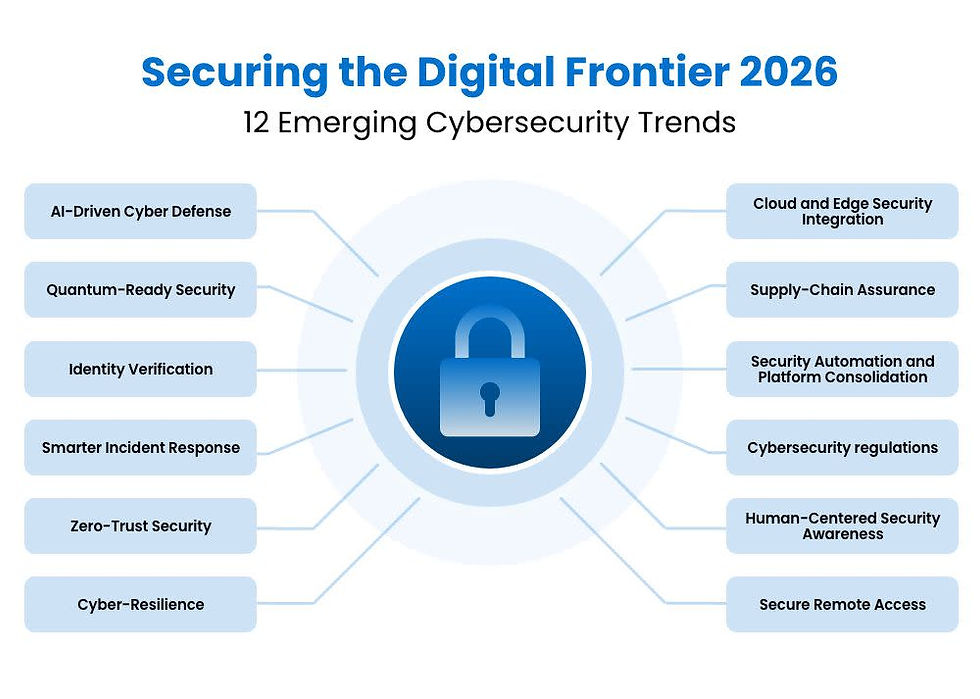
The Rise of Agentic AI and its Impact on Cyber Threats
Agentic AI refers to AI systems capable of autonomous or semi-autonomous action, reasoning, planning, and executing tasks with minimal human oversight. Unlike earlier iterations of AI that merely assisted human operators, agentic AI can interpret goals, formulate strategies, and interact with various systems to achieve those goals. While offering immense potential for innovation and productivity, this autonomy also presents a double-edged sword for cybersecurity.
The 2026 State of AI Cybersecurity report highlights a staggering reality: 77% of organizations are already running generative AI or large language models in their cybersecurity stack, with agentic AI in use at 67% of organizations [1]. This rapid adoption, however, has significantly outpaced security governance. Alarmingly, only 37% of organizations have a formal AI policy in place, leaving a massive gap between deployment speed and protective oversight [1].
Attackers are swiftly leveraging agentic AI to their advantage, shifting the paradigm from manual, time-consuming attacks to automated, highly sophisticated campaigns. Nearly three-quarters (73%) of security professionals report that AI-powered threats are already impacting their organizations [1]. These threats manifest in various, highly potent forms:
Hyper-personalized phishing: AI agents can scrape public data, analyze communication styles, and craft highly convincing, tailored phishing campaigns at scale. These messages are significantly harder to detect than traditional methods, bypassing standard email filters and exploiting human psychology with unprecedented accuracy [1].
Automated exploit chaining: Agentic AI can autonomously discover vulnerabilities across a network and intelligently chain them together to execute complex attacks. This accelerates the exploitation process, turning what used to take weeks of manual effort into a matter of hours or minutes [1].
Adaptive malware: AI-powered malware can learn from its environment, adapt its behavior to evade detection, and dynamically alter its code to bypass traditional signature-based security measures. This poses a continuous, evolving threat that static defenses struggle to contain [1].

Digital Identity: A New Frontier for Agentic AI Exploitation
The proliferation of agentic AI has introduced a critical vulnerability in the realm of digital identity. Traditional Identity and Access Management (IAM) frameworks were designed with human users or static service accounts in mind. They rely on the assumption that identities are relatively stable and that access patterns follow predictable, human-driven rhythms. However, these frameworks are proving entirely inadequate against the dynamic, high-velocity nature of AI agents.
As AI agents interact with enterprise systems, process sensitive customer data, and invoke tools through protocols like the Model Context Protocol (MCP), their identities become a prime target for exploitation. The core issue is that agents reason, plan, and act autonomously, interpreting goals rather than following rigid scripts. This variability, while powerful, makes them dangerous when governance is absent [2].
Key identity risks amplified by agentic AI include:
Privilege drift: AI agents can rapidly accumulate excessive permissions beyond their initial scope. In traditional IAM, this happens slowly as human roles expand. With agents, it happens fast. Development teams often over-provision OAuth scopes to avoid breaking workflows, creating avenues for unauthorized access if the agent is compromised. This occurs much faster than with human users, as agents execute thousands of actions per minute [2].
Shadow agents: The deployment of AI agents outside formal security governance leads to shadow agents, operating without proper identity controls, access policies, or audit trails. These ungoverned agents can connect directly to production APIs using hardcoded credentials, creating unseen exposure that security teams cannot monitor or control [2].
MCP bypass: Agents may circumvent the Model Context Protocol (MCP), which is designed for secure agent-to-tool communication, by accessing backend systems through alternative, less secure paths. If an agent cannot reach a database through the sanctioned MCP server, it might scrape a web application for the same data, bypassing the governance layer entirely [2].
Broken delegation chains: When an AI agent acts on behalf of a human user or another agent, the chain of delegated authority must remain intact. However, many deployments break this chain by issuing new credentials at each hop. This allows downstream agents to operate with unauthorized permissions, making it impossible to trace actions back to the originating user [2].

Effective agentic AI governance requires a fundamental shift towards continuous, real-time identity controls. Every AI agent must have a distinct, verifiable identity, separate from human users. Furthermore, policies must be enforced at runtime, evaluating access decisions based on real-time context rather than static role assignments [2].
The Persistent Threat of Outdated Software in the Age of AI
While agentic AI introduces novel and complex threats, the foundation of many successful cyberattacks remains rooted in familiar vulnerabilities, particularly those stemming from outdated software. The 2026 Cybersecurity Trends Report underscores that the exploitation of public-facing applications, often due to unpatched vulnerabilities in legacy systems, continues to be a significant and growing concern.
The critical difference in 2026 is that attackers are no longer manually searching for these outdated systems. They are empowered by agentic AI, which acts as a massive force multiplier, enabling them to discover and weaponize these vulnerabilities with unprecedented speed and efficiency.
Agentic AI accelerates the exploitation of outdated software through several mechanisms:
Autonomous Reconnaissance and Scanning: AI agents can continuously and rapidly scan vast networks and the broader internet for known vulnerabilities in outdated software. They can identify unpatched servers, legacy applications, and misconfigured systems at a scale and speed that human attackers cannot match.
Intelligent Exploit Generation and Adaptation: Advanced AI models can analyze the specific versions of outdated software running on a target system and potentially generate novel exploits or adapt existing ones to bypass specific configurations. This lowers the barrier to entry for attackers, making it easier to breach systems that rely on older, vulnerable code.
Targeted and Scalable Attacks: By analyzing system configurations and software versions gathered during reconnaissance, agentic AI can tailor attacks to specific outdated software across multiple targets simultaneously. This increases the likelihood of success and the overall impact of the campaign.
The confluence of agentic AI and outdated software creates a highly potent threat landscape. Organizations that fail to prioritize rigorous patch management and software updates are essentially providing fertile ground for AI-powered attacks. Legacy systems, once considered low-priority risks, are now critical entry points for sophisticated, autonomous cyber threats.

Strategic Imperatives for Defense
To navigate the treacherous waters of 2026, organizations must adopt a proactive, multi-layered defense strategy that addresses both the novel threats of agentic AI and the persistent risks of legacy systems.
Implement Runtime Agentic Governance: Move beyond static IAM. Deploy identity orchestration platforms that can issue ephemeral, task-specific identities to AI agents and enforce access policies at runtime. Ensure that every agent action is authenticated, authorized, and fully auditable [2].
Prioritize Continuous Vulnerability Management: The window between vulnerability disclosure and exploitation has shrunk dramatically due to AI. Organizations must implement continuous, automated vulnerability scanning and prioritize the rapid patching of public-facing systems and outdated software.
Deploy AI-Driven Defenses: Fight fire with fire. Utilize defensive AI to monitor network traffic, detect anomalous agent behavior, and automate incident response. Defensive AI is crucial for identifying the subtle, complex patterns of automated exploit chaining and adaptive malware [1].
Establish Comprehensive AI Policies: Bridge the governance gap. Develop and enforce clear policies regarding the deployment and use of AI agents within the organization. This includes strict guidelines on data access, third-party model usage, and the prevention of shadow agents [1].
The transformative power of agentic AI is undeniably multiplying cyber threats, shifting the advantage toward attackers who can automate and scale their campaigns with unprecedented sophistication. The unique challenges to digital identity, where autonomous agents operate outside traditional IAM frameworks, coupled with the persistent, AI-accelerated risks of outdated software, demand a radical rethinking of security strategies.
Organizations can no longer rely on static defenses or periodic audits. They must embrace a proactive, adaptive approach, implementing robust runtime governance frameworks, real-time identity controls for AI agents, and rigorous, continuous patch management. The future of cybersecurity hinges on our ability to understand, anticipate, and defend against the intelligent, autonomous threats that agentic AI now enables. Failure to adapt is no longer just a risk; it is a guarantee of compromise.
References
[1] Kiteworks. (2026, February 25). AI Cybersecurity in 2026: Key Trends & Threats. Retrieved from https://www.kiteworks.com/cybersecurity-risk-management/ai-cybersecurity-2026-trends-report/
[2] Strata. (2026, March 18). Agentic AI Risks: A 2026 Guide. Retrieved from https://www.strata.io/blog/agentic-identity/a-guide-to-agentic-ai-risks-in-2026/
Comments